This content was created by Collin Hardwick.
Yakama Nation Area
1 2020-05-05T20:59:54-07:00 Collin Hardwick ee755078ed93ca4c9a609e3d8b04a1c93d4547a4 43 1 plain 2020-05-05T20:59:54-07:00 Collin Hardwick ee755078ed93ca4c9a609e3d8b04a1c93d4547a4This page is referenced by:
-
1
2020-05-05T20:59:54-07:00
The Land
1
gallery
1447
2020-05-05T20:59:54-07:00
While born in an 11th century context, but viticultural areas were not legalized until 1905, amid concerns of fraudulent wines (Institut National de l'Origin et de la Qualite). Terrior, then was formalized in the wake of an expanding industrial and global economy. The custom of naming and codifying viticultural areas was not taken up outside of Europe until later in the 20th century. This practiced functions in two ways: it sets up an independent market to counter European luxury products. Creating AVAs can help "legitimize" these products. However, AVAs also function by to apply Western conceptions of the land to colonizing areas.
Throughout the world, terroir and viticultural areas can be used as a means to centralize power and stake territory. In "The Wine Appelation as Territory in France and California," Warren Moran argues that "assumptions about natural environmental influences are used to assert and justify political and territorial control, and thereby influence the distribution of the industry." This applies in Australia just as easily as Italy. However, in a colonial context, it is essential to understand the territorial nature of terroir. Because terroir is both naturalized and positioned as a positive force in a global economy, it aids in the erasure of the means in which control over the colonized land was gained.
For example, when it comes to Washington state wine's origin story, Wine Spectator's Thomas Skeen puts forth the most common narrative best:Dry, sunny eastern Washington state has rapidly made it to the top tier of American wine regions. Local vintners and growers say the reasons are pretty basic.
First, they'll tell you about how, some 15,000 to 17,500 years ago, massive walls of water escaping from a huge ice-dammed lake in Montana scoured the Columbia River basin east of the Cascade Mountains.
When the chaos ended, the land was left with the capacity to nurture vineyards.
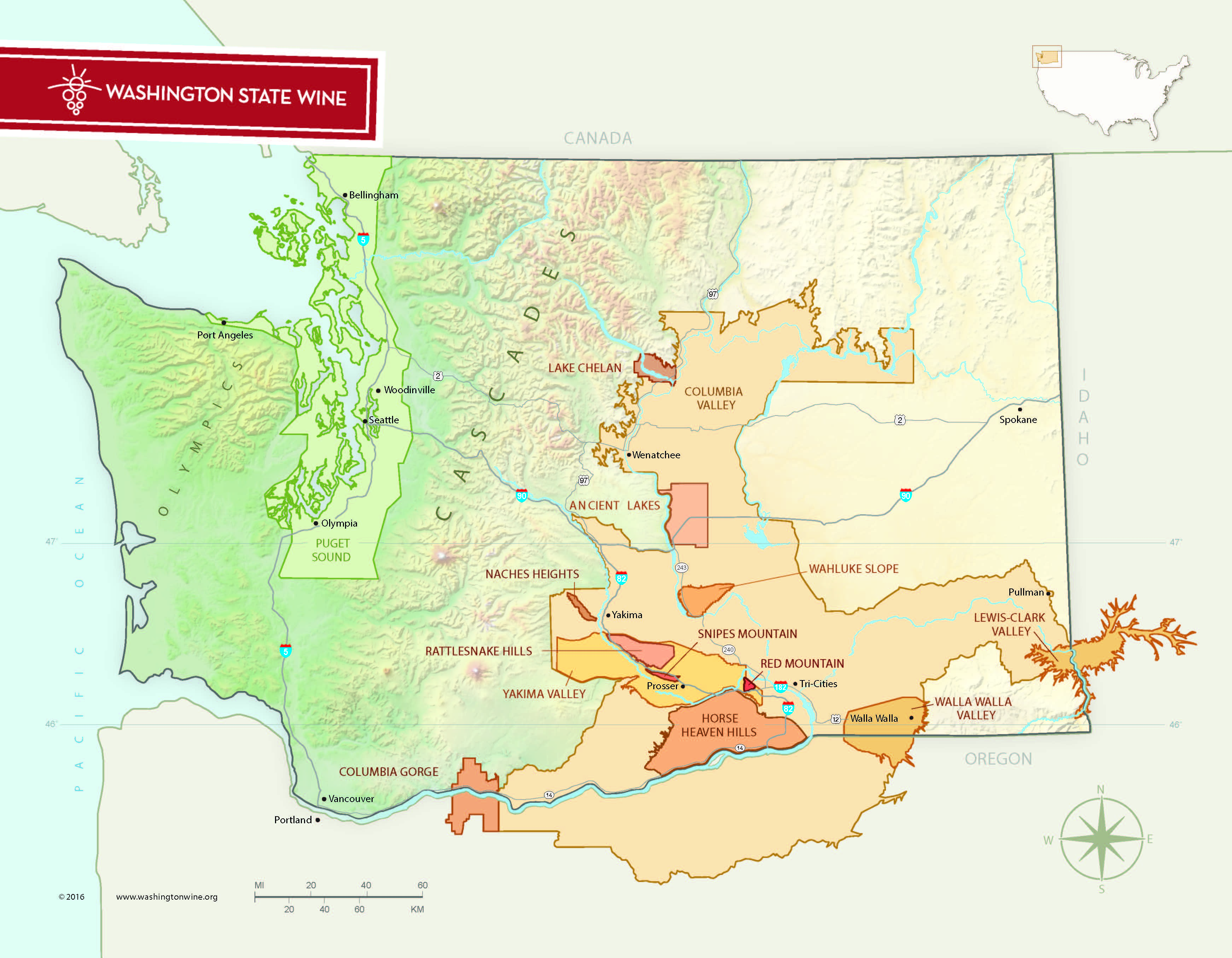
Then, they'll note simply, in 1934 Dr. Walter Clore came along.In essence, this wine narrative can be used to skip over 15,000 years of human history, obscuring and contextualizing the ways in Washington wine regions really emerged. For example, as the maps above show, the Columbia Valley Viticultural Area lies predominately on the ceded lands of the Confederated Tribes and Bands of the Yakama Nation. The conventional narrative of Washington's wine region masks the infringement on water and land rights that were necessary to the eventual planting and irrigating of vineyards.
Further, AVAs position the land within a network of terroirs, often maintaining a metropolis / colonial hierarchy. In other words, AVAs in colonized lands do not challenge the dominance of European understandings of the world -- they support their legitimacy. Though wine regions are not officially hierarchical, certainly wine from Spain, Italy, and France are traded at a higher price point than "new world" wines. Terroir, then, can be a way of centralizing economic power reifying areas of privilege.Skip to a look at terroir and globalization by clicking here.